Business Management
Yoder Lumber Focuses on What Works
By Erin Kessler
The story of Yoder Lumber began similarly to many mills in Ohio’s wood basket. The third-generation family-run mill was established in 1944 by John Yoder, who had a farm and portable sawmill. John would typically set up his mill in the woods, harvest the timber, and cut beams for on-site barns. The unused grade lumber was payment for the mill work.
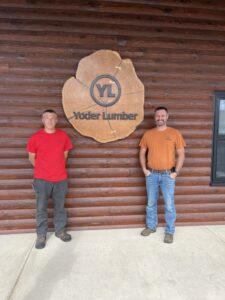
In 1956, Yoder Lumber built its first permanent site in the pasture fields of the family farm in Charm, Ohio. Over the years, Yoder Lumber has had several sawmills, which were updated as sawmill technology became more complex. Today, the company operates two facilities, one in Berlin and the other in Buckhorn, both located in the central eastern Ohio area of Millersburg. The company is owned by several of John’s grandchildren – brothers and cousins – including cousins Ryan and Trent Yoder.
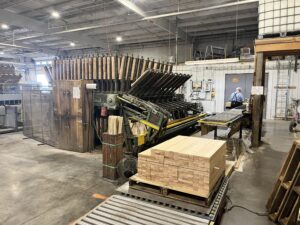
Yoder Lumber started operations at the Berlin facility in the 1980s. There, they made creepers – wheeled platforms with which mechanics used to slide underneath cars. The facility has evolved significantly since then. Today, a large focus of their production is on making custom hardwood components: stair parts, furniture parts, cabinet parts, tabletops, bartops, mouldings, etc. As a secondary manufacturer, Yoder Lumber builds the components for a variety of items, which are then sold to companies that complete the assembly.
Much of the millwork department’s final products go into restaurant or store interiors, like Panera Breads, Starbucks, and American Eagles. Yoder deals with general contractors and regional lumber yards that are “a little bit on the smaller side,” as Trent puts it.
He emphasizes that they don’t deal with the big box stores like Lowe’s or Home Depot. “We are not the lowest price, but we give [our customers] the quality and the product that they need. We are more of a service-oriented business when it actually comes down to it. We are going to be on time, give people a fair price, and we are going to be good quality,” says Trent, who works out of the Berlin facility.
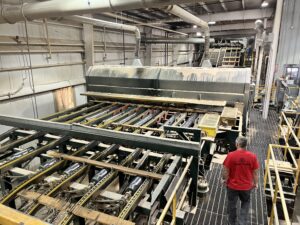
The Yoders bought their other facility in Buckhorn in 1999. It was previously a sawmill lumber yard for a component manufacturer that went bankrupt – the property and buildings were bought out of bankruptcy court. Yoder Lumber also bought back two of the company’s sawmills at auction, along with dry kilns, and a pre-drying facility, which they started up again in early 2000. In 2003, they built a 45-bin lumber sorter, which is still in operation today. By 2010, Yoder Lumber replaced the old sawmills at Buckhorn and designed and built a brand-new sawmill. At its peak, the company processed up to 7 million board feet of grade lumber through the sawmill, driving up to a total of 12 million board feet of lumber through their dry kilns per year, supplementing their kiln-drying by buying in additional supplies of green lumber.
A New Business Model
Up until 2025, Yoder Lumber was very vertically integrated, from buying standing timber and logging it, sending it through the mill, kiln drying, and secondary manufacturing. “When we had the sawmill going, we were going from the woods all the way through and it very capital intense,” says Trent. “At times it helped us because instead of just selling green lumber, we could dry it or we would remanufacture it and sell it. The thought was there was a lot of ability to add value into our products, which hopefully meant more profit.” Then, says Trent, the industry as a whole changed.
At one point, Yoder had a land clearing crew that did whole tree chipping. Then the chip market disappeared. “The chip market in Ohio went from being pretty good to, you have to pay somebody to take them, and that upset the whole model for the whole tree chips,” says Trent’s cousin Ryan, who oversaw the logging crews. Yoder Lumber has had up to five full-time logging contractors in the past.
As markets went away (the pulp and paper industries, chips), large landowners sold off much of their land, and competition for standing timber intensified, the Yoders took a hard look at the way they were operating. “We spent two to three years really evaluating the profitability of the sawmill,” says Trent. Instead of buying as much standing timber as they could, the company tried buying gatewood logs or sourcing wood from other log buyers.
“We looked at a lot of different things, and we came to the conclusion that for us, our cost of producing lumber was high enough that we couldn’t make up for it by producing more or buying the timber for less. Other people were paying the same if not more for the timber as we were.” As Yoder looked at the future of their business, they found that they could buy green lumber much cheaper than producing it themselves. “We were better off focusing on the secondary side of things.”
Instead of upgrading their sawmill, which was state-of-the-art in 2010, Yoder Lumber sold its sawmill equipment at auction in 2025. “A mill is a large piece of equipment that’s very abusive to itself,” says Trent. Although the mill would have lasted quite a while, he says, they decided the time and expense of fixing it was not worth it “just to keep it limping along.”
“By 2024, there was a lot of newer and better things out there. It’s a million-dollar investment or thereabouts just [to replace the technology part of it], scanning, automating, and optimizing… If you’re just squeaking by or losing money doing it, you don’t want to spend that much money and hopefully come close to breaking even.”
Ryan adds, “It took the huge, complicated problem of buying stuff standing in the woods, making an end product out of it and everything in between, and simplified it to where you can wrap your head around it. You can keep track of things and just do a better job management-wise. It seemed like it was always some part of the business that was struggling, or the market was bad, or it was sucking up all of your resources, and then it would change and it would be something different.”
Focusing on What Works
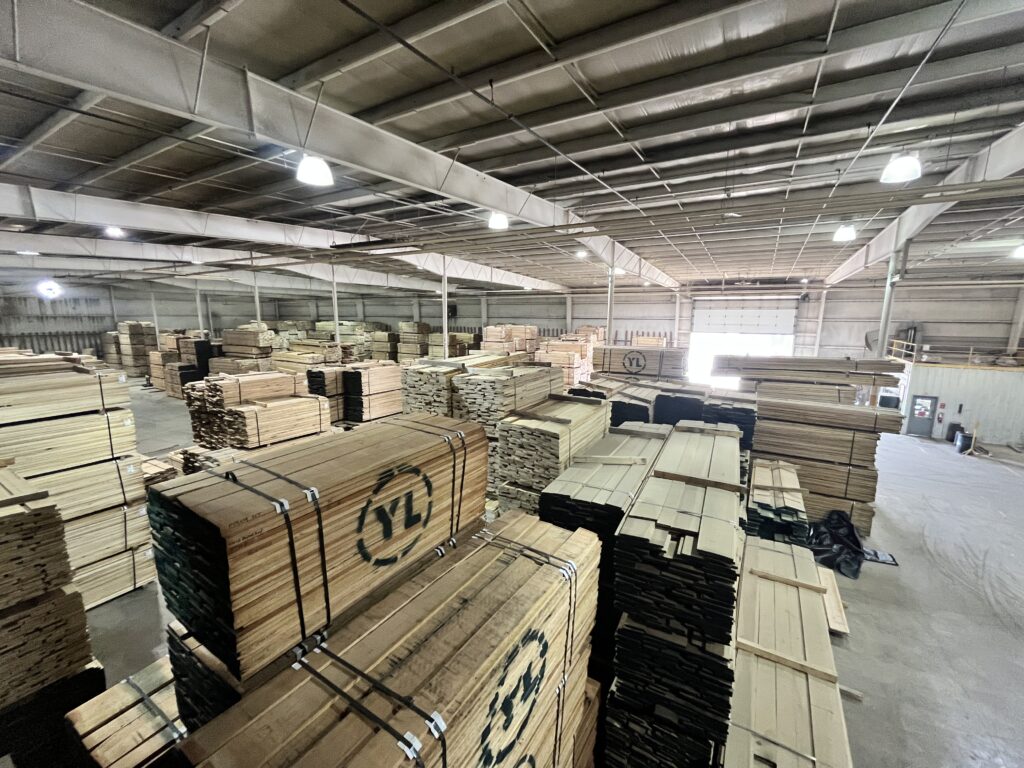
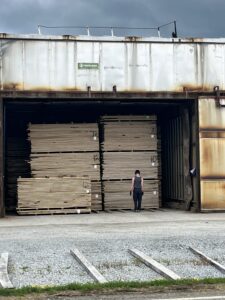
Between Yoder Lumber’s two locations – Berlin and Buckhorn – there is about half a million board feet in dry kiln capacity. They continue to buy green lumber from other local sawmills, drying 10-12 million board feet of timber per year. Much of the KD lumber goes to Yoder’s millwork department or is used for custom-made products and timber frame supplies. There is also a small retail showroom at the Buckhorn location.
“When we shut down the sawmill, we didn’t lay off anybody. We offered everybody jobs within our other areas in the business. Some people took them and some people left to go work elsewhere,” says Trent. In the last few years, they have gone from 180 employees to around 150 today. “When somebody quit, we just didn’t replace them if we didn’t need to, we just naturally shrunk,” adds Ryan.
To keep the wood supplies coming in, Yoder Lumber has maintained relationships with a few large landholders in the area that they continue to harvest timber from. They use one contract crew, H2 Logging, who sorts, grades, and sends the logs to various markets from the landing. The select species used at their millwork plant – white oak, red oak, and poplar – are sent to a contract sawmill that saws the timber for Yoder Lumber.
Trent says, “We are not going out and buying timber, we have a somewhat formal agreement with the landowners that we harvest from. I think we could probably keep Ivan (H2 Logging) busy for the foreseeable future with the amount that they have. And we have some of our own land too.”
Ivan and Dan Hostetler of H2 Logging are tasked with bucking, sorting and grading the logs, tagging them, and scanning them before they leave the landing. The logs that go to the contract sawmill are scanned into Yoder Lumber’s computer system. It takes H2 Logging more time to do this, but they are paid more to cut the timber. “I don’t have to keep staff on hand here to bring it in, cut it up, tag it, and then sort it. It basically saves a trucking cost doing it this way,” says Trent.
The Result?
Since their de-integration, the Yoders say that things are currently working out. “It’s going better than what it was. It gives us a little bit more flexibility, we can adjust to markets faster,” says Trent. “Before, when we bought timber, we would have the timber for a year before we could even harvest it. We would have the logs in the log yard and then we would cut it and then we would air dry it for 60 days… And then that species wasn’t selling for what it was before for some reason. So, our inventory turn times have improved quite a bit and we are a little more agile.”
Ryan adds, “It lets us see our books a lot better, too, as far as it being clear and separated out.” As the company grew over the years, their bookkeeping had morphed into “logs in, finished product out.” They can now more accurately see costs and profitability.
Yoder Lumber has operated for over 80 years, and the company has survived through the ups and downs of the hardwood industry. Competition these days is fierce. With the decline in the demand for finished hardwood products in the United States since 1999 and the exodus of markets into China and elsewhere, the outlook doesn’t look very promising.
Trent says, “We are not going in the right direction if the industry wants to survive long-term. There’s less usage and there will be an adjustment. There will always be usage [for hardwood] it’s just a matter of what it will look like when it’s all said and done.”
Still, the Yoders enjoy what they do, and they do it well. They will keep going and adjusting as long as they can. “The secondary side of it, we feel confident that it’s going to be there for the time being. It’s just going to be more and more competitive.” Like many in the industry right now, Trent and Ryan just wish it could be more fun.
To subscribe to The Northern Logger, go to https://www.northernlogger.com/magazine-preview/