
Diversification
Chuck Zimmerman: Logger and “Jack of All Trades”
By Erin Kessler
With the wet weather of spring turning skid roads into a muddy mess and potentially affecting water quality and causing erosion, many logging operations park their equipment and turn to other work. When The Northern Logger caught up with Chuck Zimmerman on a damp day in early April, he was working in his shop repairing some equipment.
Zimmerman has been logging for over 20 years in north central Pennsylvania and southern New York. He has a two-year degree in Forestry from Pennsylvania College of Technology and is the owner of CZ Logging out of Port Allegany, PA. He has two full-time employees and a part-time employee.
I’ve been around forestry my whole life. In college I learned a little bit of everything. At Penn Tech you do sawmilling, logging, the forester’s side of it, surveying... You do a wide range of things, which is what I liked about it. I didn’t know what I wanted to go into and it gave me other options and it’s helped me out in different aspects of life. I never would have known how to run boundary lines if I didn’t have that surveying class, so it’s helped me out in the long run for sure.
When I got out of college, I decided that I didn’t want to do paperwork. I’m more of a busybody kind of person so I worked in the woods for some other people. I was a tree feller, and I contracted with other guys cutting trees for about a year. It wasn’t enough work to keep me busy, though. I ended up going to the construction side of things. I ran and hauled heavy equipment, I was a mechanic, I did dirt work, I cut roadways, I did a little bit of everything with the construction company. I’m glad because I learned a lot and those guys are still good friends of mine.
I wanted to branch out, so I bought a machine. My dad helped me buy my first skidder, it was a cable skidder, and I started working for them [the construction company] as an independent contractor. It was guaranteed work, for a while. I cut oil field locations for shallow wells, cutting the roadways and basically doing land clearing. We marketed all the logs to whoever was paying the most at that point in time. It was October of 2004 when I started out on my own. Then I went to work for Bradford Forest Products for three or four years. I then ended up going to work for Gutchess Lumber as a subcontractor, and I have been with them for 15 years, but I also have my own jobs as well.
I was a hand-feller up until a handful of years ago, but I’ve always had a love for equipment. It intrigues me, and I’ve always done my own mechanical work, so going from hand cutting to becoming mechanized didn’t scare me. I wanted to dabble in it, so I started out small and kind of worked my way through, buying a processor and running it with a cable skidder and then buying a grapple skidder. Six years ago, I had some health issues and when I was 38, I actually keeled over with a massive heart attack. That was kind of the bigger push to go completely mechanized. I finally bought a forwarder but building up my equipment slowly has kept my overhead costs down.
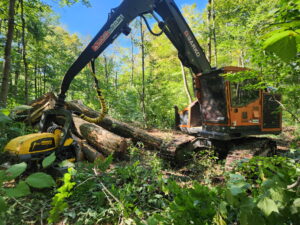
As far as equipment, I have an eight-wheeled Rottne forwarder, I have a Barko 248B processor with a Ponsse head, and then I have a skidder and a couple dozers. Being on the cut-to-length side of things there aren’t any dealerships next door. We’re overnighting everything out of Wisconsin or we’re shipping it in from Sweden. I find that we buy a lot of parts that we don’t necessarily need. If we need something, hopefully we get lucky and we just go home and it’s sitting on the shelf, but that’s not always the case.
I was actually in the process of upgrading my Barko to a new one last year. I went to CrossTrac Equipment in Vermont and tried two different machines. I didn’t end up buying a new one because with the cost of new equipment and being in such an unknown industry lately, I get a little bit of an uneasy feeling sometimes about what the future holds. I changed my game plan and just invested more into what I already own. We put the Barko processor in the shop and sunk some money into repairs. It’s fairly low hours anyway so I didn’t need to replace it, it’s just something I thought I wanted to do.
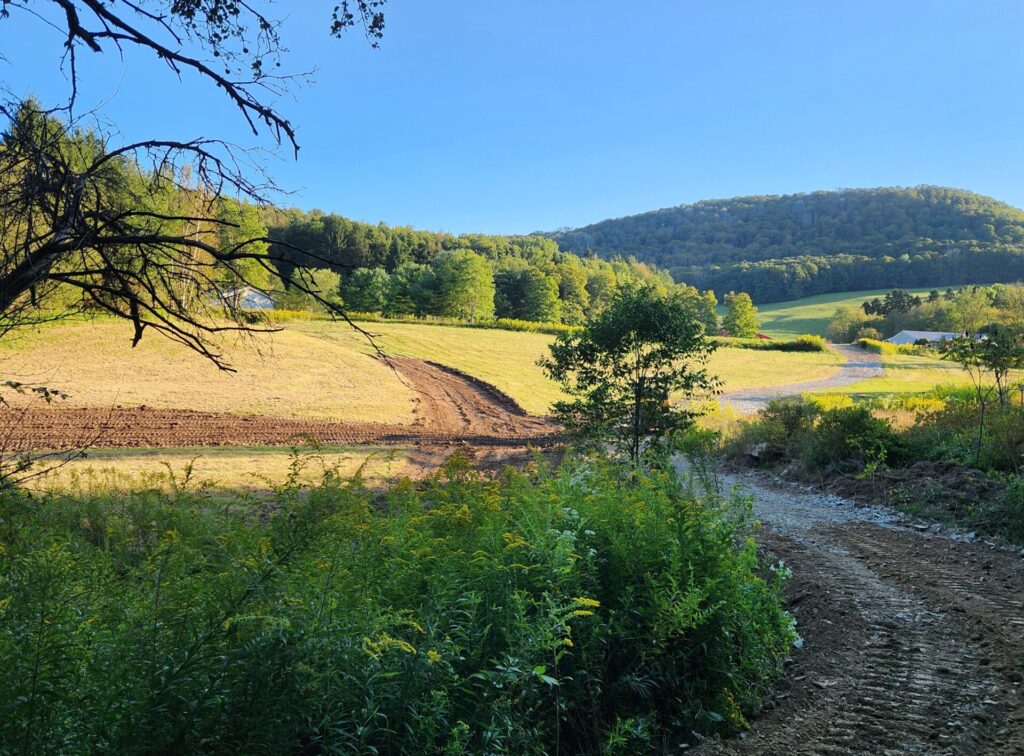
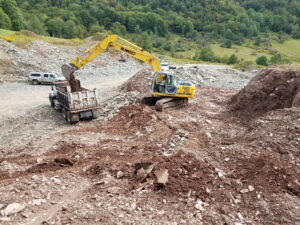
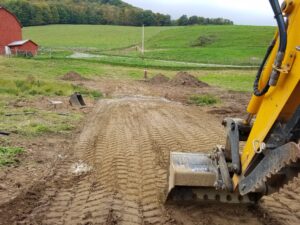
We take on quite a bit of dirt work on the side, that’s kind of how we do things. Two summers ago, we did a big roadway project for the Pennsylvania Game Commission. I bid that out and we did the timber and a buddy of mine did all the road building for that. We’ll farm out and do skid trails, landing projects, and house locations. With the Pennsylvania Department of Conservation and Natural Resources (DCNR) we’ve done some trail projects. On one project we did, they bid the trails out ahead of the logging crews so they could do herbicide work.
On top of that, I have a lowboy truck, so I move equipment on nights, weekends, and rainy days besides our own stuff. I don’t like to sit still, I like to stay moving. This business is an up and down business, so if you are not diversified in my opinion, it’s very hard to make it on just the logging side of it. You can survive, but it’s hard to get ahead. There’s a lot of little guys who never seem to advance. They can’t ever get ahead or buy more equipment. I find the more different things I do the easier it is to pay things off and be able to get on to the next machine or put money in the bank to get more established.
I do probably as much mechanical work for other people as I do myself. We really haven’t been in the woods much this spring and have been in the shop for roughly three weeks. I recently bought a relatively new dozer, it’s only three years old, and we just went through it in the shop. I worked on an excavator for another company, and I have a three-wheeled Bell feller buncher in here I’m working on for another guy.
Probably 85% of my business is logging. When I take on dirt work projects, it’s usually my dozer guy who does the work, or if we need an excavator then I’ll go run it for him, that kind of stuff, but the majority of the business is logging. It’s always been logging-driven for the most part. I have two guys that work for me and then I have a part-time dozer guy, but if we find enough work, he’s full-time. Diversification was intentional just because logging can be slow at times. Picking up extra work fills in those gaps.
I would say, find something that is close to what you are already doing so you’re not dabbling in too many things that are different than what you are already used to. There could be a lot of headache and confusion trying to manage multiple different operations that don’t coincide with each other. Doing dirt work, it’s kind of some of the same equipment that you can use for the logging side of it, or trucking, it’s versatile that way. Find that market that seems to fit the bill when things are slow in logging. It can complicate things for sure, but it’s definitely worth it in the long run, giving you a more steady income throughout the year.
To subscribe to The Northern Logger, go to https://www.northernlogger.com/magazine-preview/